

The best supplement packaging is the format that protects the formula through its intended shelf life, works reliably on the selected production line, fits the consumer’s routine, and supports the brand’s commercial targets. Bottles are usually the most versatile choice for capsules, tablets, gummies, and multi-serving powders. Pouches reduce package weight and can work well for gummies, powders, and refills. Stick packs provide portable, accurately portioned servings for free-flowing powders and some granules. Sachets cover a wider family of small sealed packets and may hold powders, granules, liquids, gels, or sample quantities, depending on the film and equipment.
That short answer is useful, but procurement teams should not choose a format from appearance alone. Supplement packaging is a product system: the formula, primary container, closure or seal, label, secondary carton, case pack, pallet pattern, filling process, storage conditions, and distribution route interact. A low unit price can become expensive if the pack causes scrap, requires a high minimum order quantity, increases freight damage, or fails stability testing. Conversely, a premium single-serve format may justify its cost when it improves convenience, trial, dosing consistency, and perceived value.
For brand owners, the practical decision is therefore not “Which package looks best?” It is “Which package creates the lowest total risk and the strongest consumer proposition for this specific formula, serving size, forecast, sales channel, and launch schedule?” The sections below compare supplement bottle packaging, supplement pouch packaging, stick pack packaging, and sachet packaging through that commercial and technical lens.
What Does Supplement Packaging Need to Do?
Supplement packaging has four essential jobs. First, it protects the contents from moisture, oxygen, light, contamination, physical damage, and unintended access. Second, it allows repeatable filling, sealing, coding, inspection, case packing, and distribution. Third, it communicates identity, directions, required label information, and appropriate brand claims. Fourth, it makes the product convenient enough that consumers can store, open, dose, use, and dispose of it as intended.
A packaging decision is strong only when all four jobs are addressed together. A beautiful pouch that is difficult to reseal may disappoint a daily user. A technically excellent bottle can still be inefficient if its headspace, count, label panel, or case configuration is poorly matched to the product. A stick pack can create a compelling on-the-go experience, but only if the powder flows, seals remain clean, and the serving fits within a practical packet width and length.
Brands should define a packaging brief before requesting prices. At minimum, the brief should state the dosage form, formula characteristics, serving size, count or net weight, target shelf life, expected storage environment, launch markets, sales channels, sustainability goals, forecast, target cost, and desired consumer experience. If these inputs are uncertain, quotations will contain assumptions that are difficult to compare.
Quick Comparison: Which Supplement Packaging Format Fits Your Product?
The right supplement packaging format depends on the dosage form, serving size, barrier requirements, consumer use case, target cost, and distribution channel. Bottles are versatile for multi-dose products, pouches offer lightweight storage and strong branding space, while stick packs and sachets are designed primarily for portable, single-serving applications.
1. Bottle Packaging

Supplement bottle packaging is one of the most versatile options for capsules, tablets, softgels, gummies, liquids, and multi-serving powders. Bottles are familiar to consumers, easy to store, and practical for products used repeatedly over several weeks or months.
Best suited for
- Capsules, tablets, and softgels
- Gummies and chewable supplements
- Liquid supplements
- Protein powders, greens, and other multi-serving blends
- Products requiring scoops, droppers, pumps, or desiccants
Key advantages
- Available in a wide range of materials, shapes, colors, and capacities
- Compatible with child-resistant caps, induction seals, liners, and tamper-evident closures
- Convenient for repeated opening, dosing, and resealing
- Provides sufficient label space for Supplement Facts, directions, warnings, and branding
- Can support moisture-sensitive products through appropriate closures and desiccant systems
Points to consider
- Rigid bottles require more storage and transportation space than flexible packaging. An oversized bottle may also create excessive headspace or make the product appear underfilled. Brands must coordinate the bottle, closure, liner, label, seal, and optional desiccant as one complete packaging system.
2. Supplement Pouch Packaging
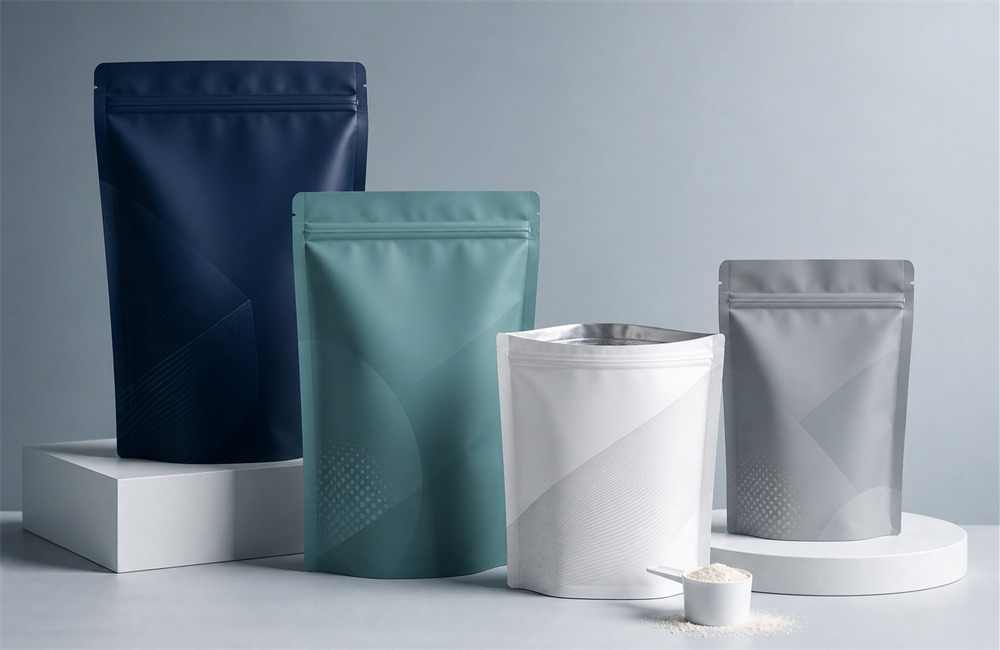
Supplement pouch packaging is commonly used for multi-serving powders, gummies, chews, refill products, and larger-format nutritional blends. Stand-up pouches combine flexible construction with a broad printable surface, helping brands reduce package weight while creating strong shelf visibility.
Best suited for
- Protein powders and meal-replacement blends
- Collagen, greens, and superfood powders
- Gummies and soft chews
- Bulk or refill products
- Direct-to-consumer products where shipping efficiency is important
Key advantages
- Lightweight and space-efficient during storage and transportation
- Offers a large surface for custom graphics and product information
- Available with resealable zippers, tear notches, hang holes, and gussets
- Can reduce unnecessary package volume compared with some rigid containers
- Works well for both retail products and refill programs
Points to consider
- Pouch performance depends on more than film thickness. The laminate structure, moisture and oxygen barrier, puncture resistance, zipper quality, top-seal integrity, and compatibility with the formula must all be evaluated. For powders, fine particles can contaminate the zipper or sealing area, making the package harder to close or increasing the risk of seal failure.
3. Stick Pack Packaging

Stick pack packaging uses narrow, elongated packets to deliver individual servings. It is particularly effective for powdered supplements that consumers mix with water or carry for use at work, while traveling, or during exercise.
Best suited for
- Electrolyte and hydration powders
- Collagen and beauty supplements
- Greens and superfood drink mixes
- Probiotic powders
- Pre-workout and energy formulas
- Other portable, single-serving supplements
Key advantages
- Convenient for travel and on-the-go consumption
- Provides a premeasured serving that simplifies dosing
- Protects unused servings because each stick remains individually sealed
- Supports sampling, subscriptions, variety packs, and daily-use programs
- Creates a modern format with strong perceived convenience
Points to consider
- Not every powder runs efficiently on a stick pack line. The manufacturer must evaluate bulk density, flowability, particle size, hygroscopicity, electrostatic behavior, and dose volume. Bulky servings may require an unusually wide or long stick, while fine or sticky powders may interfere with filling accuracy and seal integrity. Brands should also include the cost of outer cartons or pouches when calculating the total packaging cost.
4. Sachet Packaging
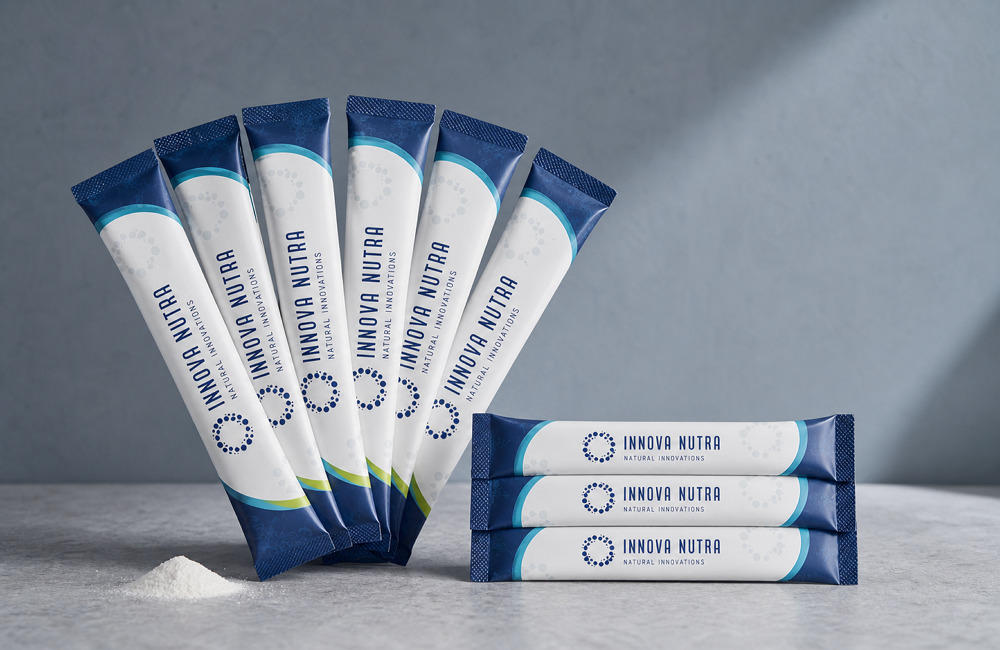
Sachet packaging is a broad category of small, sealed flexible packets. Sachets are generally wider and shorter than stick packs and can accommodate powders, granules, liquids, gels, and sample-size products when the film structure and filling equipment are compatible.
Best suited for
- Powdered or granulated supplements
- Liquid concentrates and gels
- Larger single-serving doses
- Trial-size and promotional samples
- Products requiring more front-and-back printing space
Key advantages
- Accommodates a wider range of product textures and serving volumes
- Provides more room than narrow sticks for directions, branding, and regulatory information
- Can use three-side, four-side, or customized seal configurations
- Suitable for single-use samples and channel-specific promotional programs
- Offers strong portability while keeping each serving separately protected
Points to consider
- The term “sachet” does not define a specific barrier level or material. Brands must specify the dimensions, laminate, seal design, tear notch, printing requirements, and filling process. Wider sachets may use more film per serving than stick packs, and poorly positioned tear notches can cause difficult opening, product spills, or inaccurate pouring.
At-a-Glance Recommendation
Choose bottle packaging when versatility, repeated use, and broad dosage-form compatibility are the main priorities. Choose supplement pouch packaging when you need a lightweight, resealable format for multi-serving products or refills. Choose stick pack packaging for narrow, portable, premeasured powder servings. Choose sachet packaging when a single-serving product requires more capacity, greater artwork space, or compatibility with powders, liquids, or gels.
Not Sure Which Packaging Format Fits Your Formula?
Barrier needs, dose volume, line compatibility, MOQ, and shipping can change the answer. Innova Nutra can help you compare bottles, pouches, stick packs, and sachets before you commit to commercial materials.
Supplement Bottle Packaging: Strengths, Limits, and Best Uses

Bottles remain a default choice because their supply chain is mature and their performance can be tailored. High-density polyethylene bottles are widely used where moisture protection, durability, and low weight matter. Polyethylene terephthalate bottles provide clarity and a glass-like appearance for products that are not light sensitive, while amber or opaque constructions can help manage light exposure. Glass can communicate quality and offer strong chemical resistance, but it adds weight and breakage risk.
The closure is as important as the bottle. Options may include continuous-thread caps, child-resistant closures, flip-tops, droppers, pumps, and measured-dose components. Liners and induction seals support tamper evidence and barrier performance. Desiccants may be added when moisture management is necessary, but the correct type, capacity, placement, and compatibility should be established through technical review rather than habit.
Bottles perform particularly well when consumers take multiple units over several weeks. They are easy to display, reseal, and count. They also allow a brand to standardize a family of SKUs around a common diameter or label size. However, low fill levels can look wasteful, wide bottles take space in parcels and retail cases, and every component creates a separate purchasing and quality-control requirement.
For capsules or tablets, brands can review Innova Nutra’s capsule manufacturing capabilities to see how formulation, filling, inspection, and packaging fit into one production path.
Supplement Pouch Packaging: Flexibility and Freight Efficiency
A stand-up pouch can combine a printable outer surface, barrier layers, sealant layers, tear notches, rounded corners, and a zipper in one component. Compared with a rigid container, an unfilled pouch requires little storage space and a finished pouch can reduce shipping volume. These benefits can be meaningful for direct-to-consumer products, refills, and products sold in larger net weights.
Pouch performance depends on the laminate, not simply its thickness. Oxygen transmission rate and water-vapor transmission rate are more informative than a generic claim that a film is “high barrier.” Light protection, puncture resistance, flex-crack resistance, seal initiation temperature, hot-tack behavior, and chemical compatibility may also matter. The correct structure should be selected against the formula and distribution conditions.
Powders introduce practical concerns. Fine particles can migrate into the top-seal or zipper area, reducing seal integrity or making the package messy to close. A pouch must remain stable during filling, hold the declared net quantity without looking underfilled, and survive drop and compression forces in parcel shipping. If a scoop is included, the opening should allow comfortable access without coating the consumer’s hand in powder.
Pouches can deliver strong shelf impact, but they are not always the cheapest option at launch. Custom-printed films or preformed pouches may have artwork setup requirements and supplier MOQs. Short runs may use labels on stock pouches, trading visual integration for lower initial commitment. A procurement comparison should separate the pouch price from filling speed, changeover, scrap, coding, case packing, and freight.
Stick Pack Packaging: Portability and Precise Servings
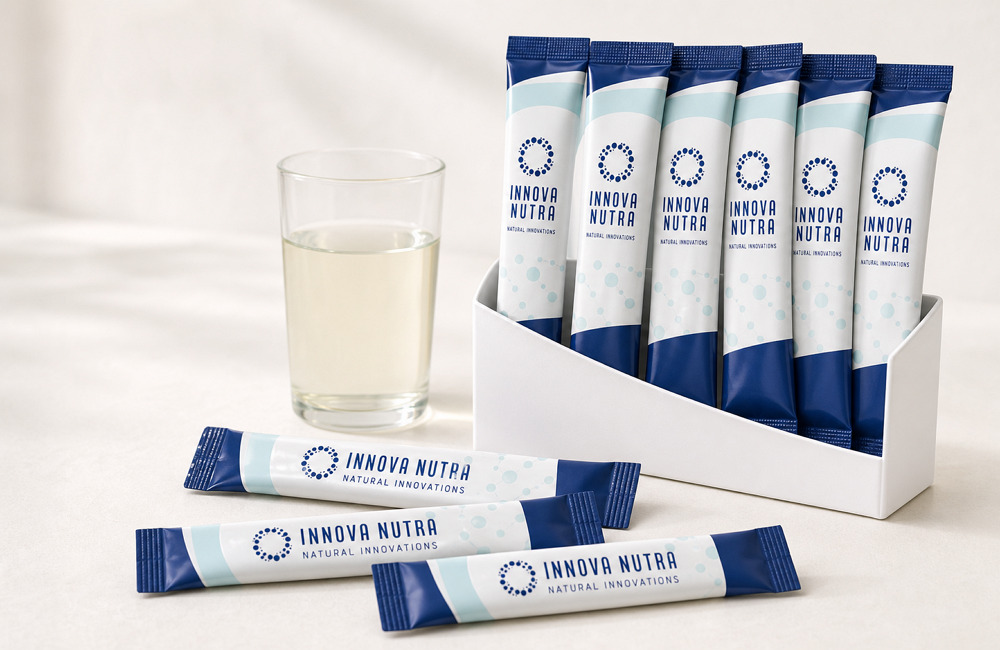
Stick packs convert a bulk formula into individual servings. Consumers can place them in a bag, desk drawer, gym kit, or travel case, and the brand can present a clear daily-use occasion. Because each serving is sealed until use, the remaining servings are not repeatedly exposed when the consumer opens the package. This can be valuable for moisture-sensitive powders, provided the laminate and seals deliver the required barrier.
The formula must fit the geometry. A bulky serving can require a long or wide stick that loses the compact advantage. Powders with poor flow may bridge, dust, or create variable fill weights. Oily flavors or hygroscopic ingredients can affect the film or sealing area. The manufacturer should evaluate bulk density, angle of repose, particle behavior, dose tolerance, seal contamination, and machine compatibility during development and scale-up.
Stick packs also change the cost structure. Instead of one primary container per bottle, the project uses one film package per serving plus an outer carton or pouch for retail presentation. Material and conversion costs rise with serving count, and cartoning or counting operations add labor and equipment time. The format can still be commercially attractive when consumers value convenience or when single servings support subscriptions, sampling, hospitality, clinics, or event distribution.
Brands developing drink mixes or other powdered products can learn more about powder supplement manufacturing and the packaging choices available for multi-serving and single-serve products.
Sachet Packaging: A Versatile Single-Dose Family
A sachet is generally a sealed flexible packet created from rollstock or preformed material. Unlike the narrow stick format, sachets may use three-side, four-side, or shaped seals and can offer more printable area. The word “sachet” does not define one barrier level or one filling process; the specification must identify the contents, dimensions, seal design, opening feature, material structure, print, and intended machinery.
Powder sachets can carry larger or less free-flowing servings than a very narrow stick. Liquid sachets require films and seals that tolerate the formula, and their equipment must control splashing and seal-area contamination. Sample sachets can help brands distribute trial quantities at a lower shipping weight than rigid samples. Wider packets also give more room for directions, lot coding, and multilingual copy.
The user experience deserves testing. Tear force, notch position, opening direction, pour accuracy, and residual product all influence whether the packet feels premium. A sachet that tears unpredictably or leaves powder trapped in corners can undermine repeat purchase. Physical prototypes filled with the actual formula provide better evidence than a flat artwork proof.
How Packaging Changes Cost
Packaging cost includes more than the quoted price of the container or film. A useful total-cost model includes primary materials, closures, liners, desiccants, scoops, labels, printed film, cartons, inserts, coding consumables, setup, tooling or plates, line changeovers, filling labor, inspection, scrap, cases, pallets, warehousing, freight, and the financial cost of holding inventory.
Bottles often have a relatively transparent component structure, but a custom color, mold, closure, or decoration can increase MOQ and lead time. Pouches may reduce freight but require a substantial printed-material commitment. Stick packs and sachets distribute packaging cost across every serving and usually require secondary packaging. Unit economics should therefore be compared at the sellable-unit level and at the serving level.
Forecast accuracy matters. Ordering a large quantity of printed packaging may lower the component price but increase exposure if artwork, regulations, formula claims, or demand changes. Neutral stock components with pressure-sensitive labels can preserve flexibility during validation or early market testing. Once demand becomes predictable, printed components and optimized line configurations may improve economics.
MOQ: Why Minimums Differ by Format
There is no universal supplement-packaging MOQ. The practical minimum is created by several linked constraints: the packaging supplier’s order quantity, the quantity of printed material required for an efficient press run, the manufacturer’s batch size, the packaging line’s setup and cleaning time, secondary packaging quantities, and acceptable yield loss.
A stock bottle and stock cap with a digitally printed label may support a lower launch commitment than a custom-colored bottle or decorated closure. A stock pouch with a label may require fewer units than fully printed rollstock. Stick packs and sachets may be constrained by film-printing minimums, machine setup, outer-carton quantities, and the number of packets per sellable unit.
When comparing quotations, ask each supplier to state the MOQ for the finished sellable unit, the minimum purchase for each custom component, expected overrun or underrun, unused-material ownership, storage terms, and whether remaining printed materials can be used in a later batch. Those answers reveal cash-flow and obsolescence risk that a headline MOQ hides.
Stability and Product Protection
Packaging should be qualified with the actual formula and final pack configuration. Ingredient sensitivity varies: some formulas readily absorb moisture; others oxidize, lose aroma, react with light, stain surfaces, or interact with sealants. Even a high-barrier material can underperform if seals are incomplete, cap torque is inconsistent, an induction seal is poorly applied, or repeated consumer opening creates exposure not represented by the test plan.
A stability plan may evaluate appearance, odor, flavor, moisture, potency, microbiological quality, physical integrity, dissolution or disintegration where relevant, and package performance across defined storage conditions. The pack used for stability should match the intended commercial system, including count, headspace, closure, liner, desiccant, scoop, outer carton, and film structure.
Distribution testing addresses different risks. Compression, vibration, drops, altitude, temperature cycling, and parcel handling can reveal leaking closures, burst pouches, seal failures, abrasion, scuffed labels, or crushed cartons. A package that succeeds in a controlled room may still fail in a hot delivery vehicle or a mixed parcel network. Shipping cases and pallet patterns are therefore part of the packaging system.
Transportation, Warehousing, and Sustainability Tradeoffs
Flexible packaging is typically lighter and more space efficient than rigid packaging, which can reduce inbound component storage and outbound freight volume. Bottles can offer excellent protection and stack predictably in cases, but they ship with internal air when the product does not fill the container. Glass increases weight and protective packing needs. Single-serve formats may prevent product waste and support adherence, yet they use one wrapper per serving.
Sustainability claims require specific evidence. “Recyclable,” “compostable,” “biodegradable,” and “made with recycled content” describe different attributes and depend on material, local collection, sorting, end markets, certifications, and consumer instructions. A mono-material pouch may improve theoretical recyclability while still facing limited collection. A heavier rigid pack may participate in a more established recycling stream. Brands should avoid broad environmental claims that exceed substantiation.
The most defensible strategy is to set measurable priorities: reduce package weight, improve product-to-package ratio, eliminate unnecessary secondary components, select right-sized cases, use qualified recycled content where appropriate, or improve consumer disposal instructions. These goals can be compared without pretending that one format is always sustainable.
Branding, Label Space, and Consumer Experience
Packaging is the physical interface between the formula and the customer. Bottles provide familiar front and back label panels and can use shrink sleeves for more coverage. Pouches offer a broad printable canvas and strong shelf presence. Sachets offer useful front-and-back space for a single serving. Stick packs are visually distinctive but narrow, which makes hierarchy, typography, required information, and production tolerances especially important.
Artwork must be developed from the approved dieline and printing process. Seals, zippers, gussets, label gaps, curves, overlap areas, lot-code zones, and tear notches reduce usable space. Small type may look acceptable on a monitor but fail when printed. Barcode contrast and quiet zones, varnishes, metallic effects, and color shifts should be reviewed on production-representative proofs.
Consumer testing can be simple and useful. Ask target users to find the serving size, open the pack, dispense the dose, reseal it, store it, and explain disposal. Observe errors instead of relying only on stated preferences. The best packaging makes correct use obvious and supports the brand promise without adding friction.
A Practical Packaging Selection Framework
Begin with product constraints. Identify dosage form, serving volume, bulk density, moisture and oxygen sensitivity, light sensitivity, aroma, oil content, particle behavior, and likely interaction risks. Eliminate formats that cannot reliably contain or dispense the product.
Next, define the use occasion. Decide whether the product is used at home, carried daily, mixed into water, shared by a household, sampled once, or consumed under professional supervision. This step often separates a multi-use bottle or pouch from a portable stick pack or sachet.
Then quantify the commercial model. Compare sellable-unit cost, cost per serving, packaging inventory exposure, production yield, warehousing, freight, fulfillment fees, retail display requirements, and expected price position. Model at least a launch volume and a scaled volume because the preferred format can change as demand grows.
Finally, validate before committing. Review component specifications, supplier documentation, artwork proofs, filled prototypes, line trials, seal checks, shipping tests, and stability data. Record the approved bill of materials and change-control expectations. The result should be a documented packaging specification, not a verbal preference.
Choose Packaging as Part of the Product Strategy
Bottles, pouches, stick packs, and sachets are not interchangeable decorations. Each format changes barrier performance, equipment requirements, unit economics, inventory exposure, shipping, label space, and the way consumers use the supplement. Bottles offer versatility and familiarity. Pouches provide lightweight, high-impact flexible packaging. Stick packs make precise servings portable. Sachets accommodate a broad range of single-dose shapes and contents.
The strongest decision starts with the formula and the consumer, then works backward through manufacturing, testing, sourcing, and distribution. Brands should compare total cost rather than component price, verify MOQs at both material and finished-unit levels, and qualify the complete package through line trials, stability work, and distribution testing.
Innova Nutra provides end-to-end supplement manufacturing and packaging support, helping brands connect formulation, dosage form, component sourcing, filling, labeling, quality control, and commercial scale-up. Explore our private label supplement services, review why quality packaging matters, or contact the team with your formula, target serving, preferred format, forecast, and launch date for a project-specific review.
Ready to Build a Market-Ready Supplement?
Bring your formula, serving size, target market, forecast, and packaging ideas. Our team can coordinate formulation, manufacturing, quality control, custom supplement packaging, and fulfillment around a practical launch plan.